The Hard Part of Outgrowing a Thing You’re Good At
I just knew I was making a second season of What I Let Die Podcast (tucks non-existent hair behind right ear). I was confident about that.
It made all the sense. I had already co-produced the first season with my brilliant friend, Kate. I had more to say about grief, more questions I wanted to sit inside, and a whole lot more life happening around me that was making grief feel central, culturally and personally.
Also, I know how to make a podcast. I started podcasting in like, 2014! And for 8+ years I made Fare of the Free Child. Then Kate and I made What I Let Die, a twelve-episode grief literacy podcast. I know how to find the thread of an episode, how to make intimacy out of voice/sound, how to speak to the heart of someone I cannot see and still make it feel like we are somewhere together. So yeh, another season made total sense.
Except... every time I tried to feel my way toward it, the werk was somewhere else.
I recognize this feeling because it has happened before. I felt it when Fare of the Free Child came through. I felt it when I Let It Die, my grief course, started becoming a real body of work instead of some notes and ideas I was carrying around from my seminary experience. I felt it when What I Let Die arrived, and again when my supadope sistren Thea Monyeé and I realized that the Bringing Flowers project was something we were actually doing, for real-for real.

There is a particular charge that comes when an idea is becoming more than an idea. I do not always know what it is yet, but I know something is happening.
And something is happening again.
I have been spending a lot of time in spaces where grief is central. I sit in grief circles every month. I do grief work with people individually. I volunteer in hospice. I am learning through my work with my city's Regional Commission and the realities of aging, caregiving, dying, and what life starts asking of us as our bodies and relationships change. Bringing Flowers keeps bringing me into deeper study of grief cultures, and all the ways people live with loss that do not line up neatly with the versions we are most familiar with.
The more time I spend there, the more I notice how much grief support relies on somebody being able to explain themselves.
We ask people to tell us what happened. Tell us how they feel. Name the loss. Find the language. Make the thing coherent enough for somebody else to understand it and maybe offer something useful back.
I am a writer. I am a talker. You see how long this essay is, yeh?! Words are one of the main ways I have moved through the world and made my work in it.
Aaaaand I am getting increasingly tired of making (or pretending!) words do everything.
Grief is often in the body before it comes out of the mouth. Sometimes it is irritation or numbness. Sometimes it is relief, or somebody laughing at what feels like the wrong time. Sometimes the body is doing a thing that the mind has not caught up with yet. Sometimes a person knows something has ended, but there is no clean sentence for what the ending was.
There are losses we do not know to call losses. There are griefs we are ashamed to admit. There are changes that affect how we move, choose, relate, eat, sleep, work, love, and still never become a story we know how to tell.
That is part of what I mean when I talk about kananápo, a Jamaican Patois word (of West African origins) I learned from my grandmother Ethel and her sisters. I use it for non-body deaths: relationships, roles, dreams, identities, beliefs, and whole versions of ourselves that can die without anybody gathering to mark what happened.
I taught about kananápo through I Let It Die. I explored it through What I Let Die. Both of those forms gave me something I needed. They also helped me notice what I want to make room for now.
A freaking talk show. That is what this next body of work is becoming 😮
Something visual. Something meant to be watched. Something where a hand movement can be part of the answer, or a pause can stay a pause without me rushing in to translate it. I want space for ceremony and movement. I want objects to mean something. I want whatever is happening between two people to have room to be seen, even when the language gets messy or never fully shows up.
I want to explore the griefs that surprise us, the ones we hide, and the ones that feel culturally or personally taboo. The grief that comes with relief. The grief attached to resentment. The loss that makes somebody feel freer and ashamed about feeling freer. The thing that ended years ago but is still shaping choices that look, from the outside, like procrastination or indecision or somebody being difficult. And I want to do that without relying so heavily on eloquence.
This is exciting to me! It is also asking me to become a beginner in public again. Uuugh!! 🙄
I know audio. I know courses. I understand how to facilitate a room and how to build a relationship with people through a mic. A talk show brings in visual storytelling, production, movement, set, pacing, and the reality that the body is now part of the text in a much more obvious way.
There are easier choices I could make. I could make a second season of the podcast. I already understand the machinery. People know what a podcast is. I would not have to explain so much or learn so many new things at once.
But the werk just ain't askin' me for another season.
That has me thinking about how creators decide what comes next, especially those of us who have been making things online for a long time. We can get so used to asking what the next episode is, what the next course should teach, or how to keep a format going that we forget to check whether the format is still telling the truth about where the work has gone.
Sometimes the thing works and still feels complete. Sometimes the audience would gladly take more and you still know you are finished. Sometimes your skill in a particular form becomes the very reason it is hard to leave. Competence is comfortable. People know us there. We know ourselves there too.
Not that I regret any of the forms that brought me here. The courses taught me what it means to accompany people over time. Podcasting taught me how to make a room out of mere sound. Facilitation keeps teaching me to pay attention to what is happening underneath whatever people are saying.
I am carrying all of that into this next thing, and I am also letting the next thing change me. There is more uncertainty here than there would be in making another podcast season. There is also a kind of aliveness I know well enough to trust. I can feel myself standing near the edge of what I already know how to do, holding the parts that still fit and loosening my grip on the rest.
That feels like creator work to me too, though. Not only making the thing, but staying close enough to notice when the thing is trying to become something else.
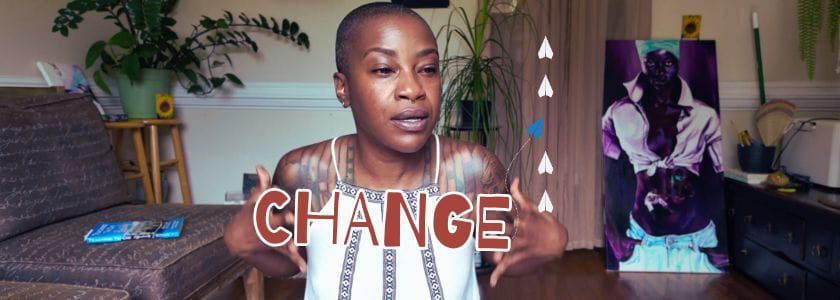
I recorded a more intimate State of the Network video for the people who support my work through Patreon (my make-it-happen family). I talk there about how this transition has been unfolding, what has been shaping it, and some of what I am beginning to build.
You can watch that (equally wordy) video above or click here. If you do, please Like it on YouTube so that I know you watched a bit or all of it. Tonx!
Plenty love! And Happy (almost) Juneteenth!! I'm chillin' tomorrow! You?
Member discussion